Dino Zampogna
Dino Zampogna was born in Naples on 11 March 1926. He was an Italian painter known for post-Impressionist works that combined creative sensibility with techniques drawn from French Impressionists such as Manet and Cézanne. His father was the painter Giocondo Zampogna, a follower of the School of Posillipo and a skilled marine painter influenced by Flemish and Dutch traditions, and his mother was Catherine Volpi, a Lombard noblewoman. Dino grew up immersed in art in his father’s studio while his father remained his primary teacher and influence. Although his family initially opposed his artistic path and pushed him toward technical studies, he later pursued formal art training at a high school and the Academy of Brera.
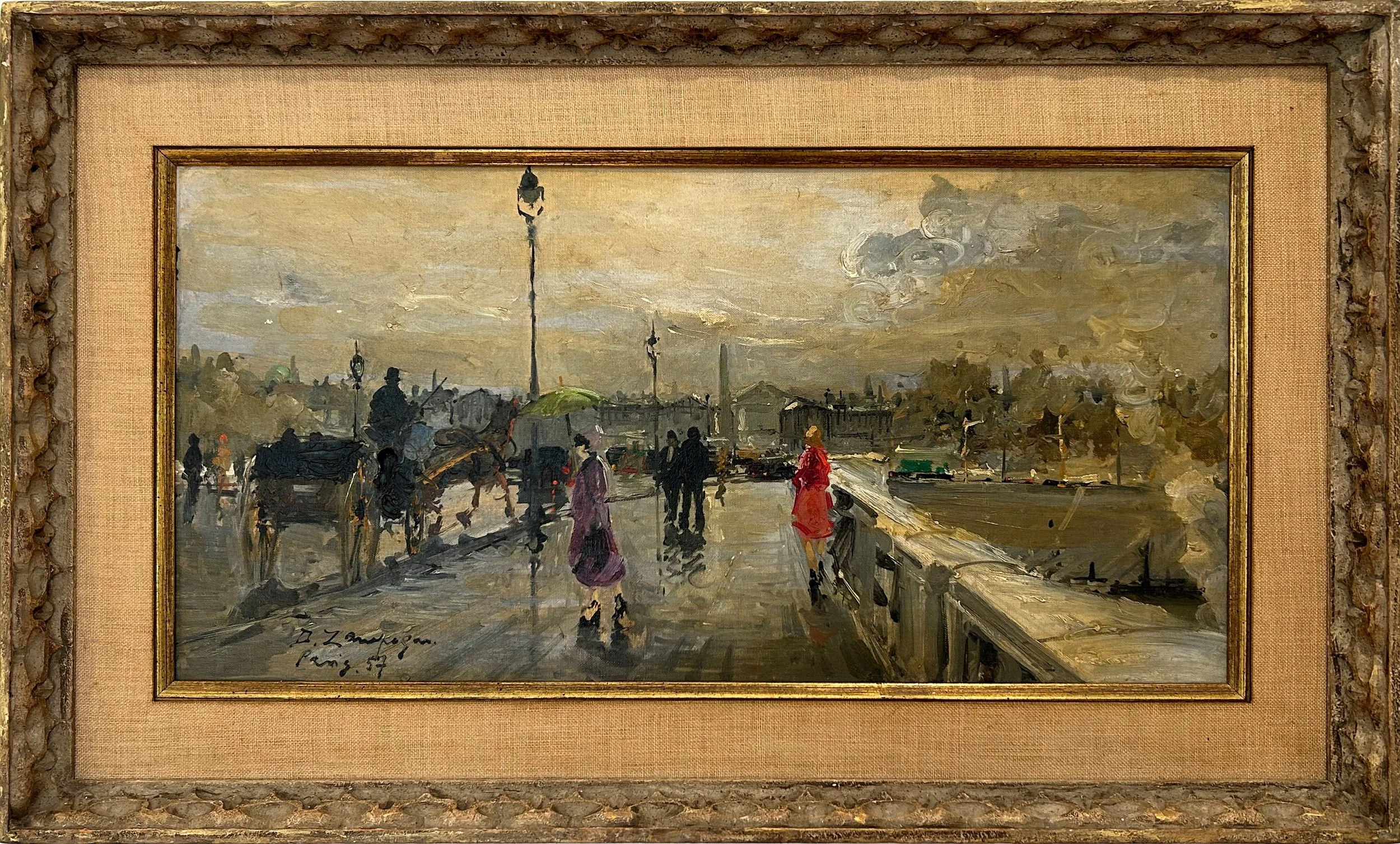
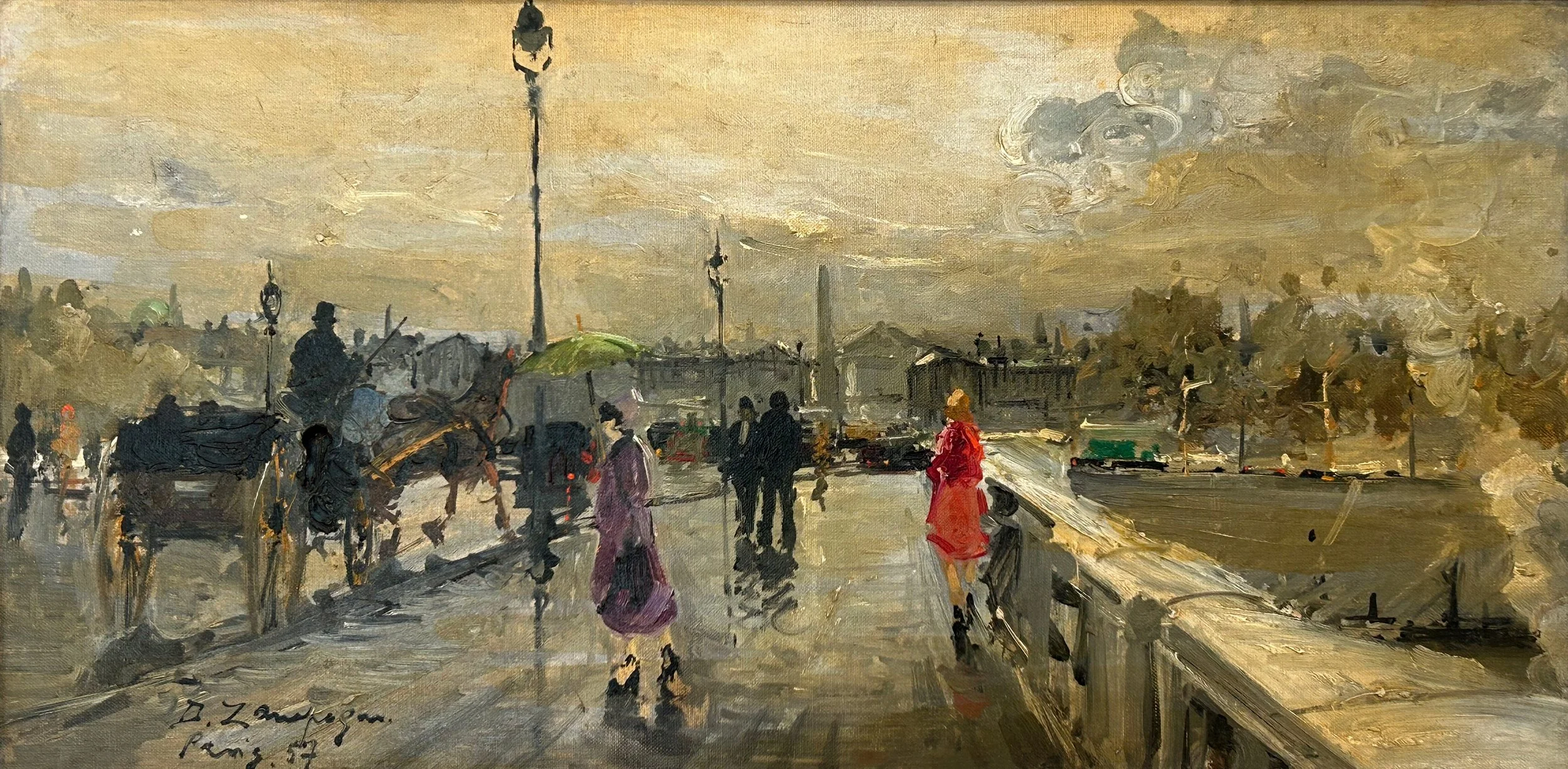
Zampogna’s painting was driven by feeling and a sensitive vision of nature or the human face. He used large, soft brushstrokes to capture essential, warmer traits of his subjects and create atmospheres of delicacy. His style is post-Impressionist, treating portraits, views, nudes, and landscapes. Favorite themes included nudes, affluent and Mediterranean landscapes, lively racecourse scenes, and cityscapes of Naples, Milan, and especially Paris. He also produced London scenes such as Trafalgar Square. His career passed through distinct phases. From 1970 to 1974, he focused on a “fantasy” genre of flower-women. This led into the more mysterious “Presets arcane” period that began in 1975 while he was in Holland. His wife Iris, noted for her beautiful black hair, inspired many of his finest canvases; their children Titian and Nadia also appear in his work.
He exhibited widely and received support from Italian and foreign critics including Lepore, Portalupi, Villani, Piceni, De Grada, Barbieri, Gerace, and Viviani. Writer Dino Buzzati praised the “violent exuberance of color” in his work and described him as “a Mancini emerged from a bath of scented powder in Paris and then London fog,” noting his elegant navigation of residual post-Impressionist waters with echoes of Mancini, Boldini, and De Nittis, appreciated for vivacity of color, gentle sensuality, and worldly pleasure. Zampogna worked and showed in Italy, France, England, Germany, Belgium, North America, Canada, Argentina, Venezuela, and Mexico. His paintings entered public and private collections; some were permanently associated with the Hartmann Gallery. He had a solo exhibition at Galleria Ranzini with a presentation by G. Mussio in Milan in 1959. A 1976 monograph titled ‘Zampogna Dino: Poetica di un pittore’ with texts by Dino Villani further documented his work. Zampogna died in 2016, and his oeuvre remains characterized by colorful, atmospheric views and figurative scenes that continue to captivate his audience.