
• CURRENT
    • UPCOMING
    • PREVIOUS
  • CONTEMPORARY
  • FINE
    • PRIVATE CLIENTS
    • MEMBERS OF THE TRADE
  • PRESS
  • ABOUT
  • CONTACT
  • Sign In My Account
Menu

Lilac GALLERY

833 Broadway 3rd Floor
New York, NY, 10003
212 255 2925
CONTEMPORARY AND FINE ART

CONTEMPORARY AND FINE ART | NYC

Lilac GALLERY

  • EXHIBITIONS
    • CURRENT
    • UPCOMING
    • PREVIOUS
  • CONTEMPORARY
  • FINE
  • SHOWROOM
    • PRIVATE CLIENTS
    • MEMBERS OF THE TRADE
  • PRESS
  • ABOUT
  • CONTACT
  • Sign In My Account
Purvis Young.jpg

Purvis Young

Purvis Young was born in Liberty City, a neighborhood of Miami, Florida, on February 2, 1943. He was first introduced to drawing by his uncle, a local sign painter, and Young developed as a self-taught artist, whose work served as a visual pulse for Miami’s Overtown neighborhood. Young’s creative turning point occurred during a three-year prison sentence in his late teens. Deprived of formal art training, he spent his time in the prison library studying the masterpieces of Rembrandt and Van Gogh, developing a style that would later merge classical influences with raw, urban expressionism.

Upon his release in the mid-1960s, Young settled in Overtown, a community then struggling with the impacts of urban renewal. In the early 1970s, he gained fame for transforming a derelict passageway known as Goodbread Alley into an outdoor gallery. He nailed hundreds of his paintings to the walls of abandoned buildings, using discarded materials like plywood and cardboard as his canvases to bring his community's stories to light.

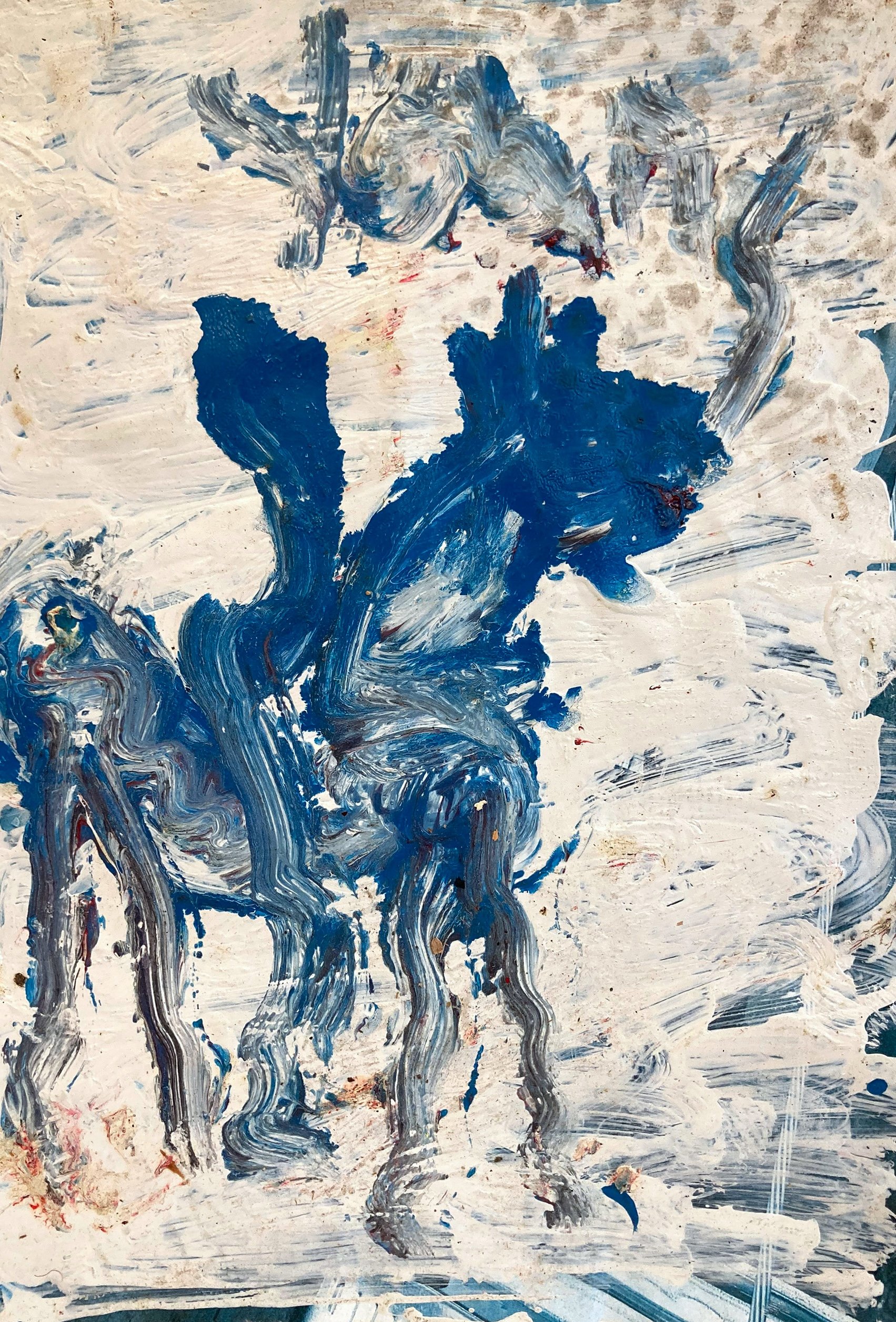
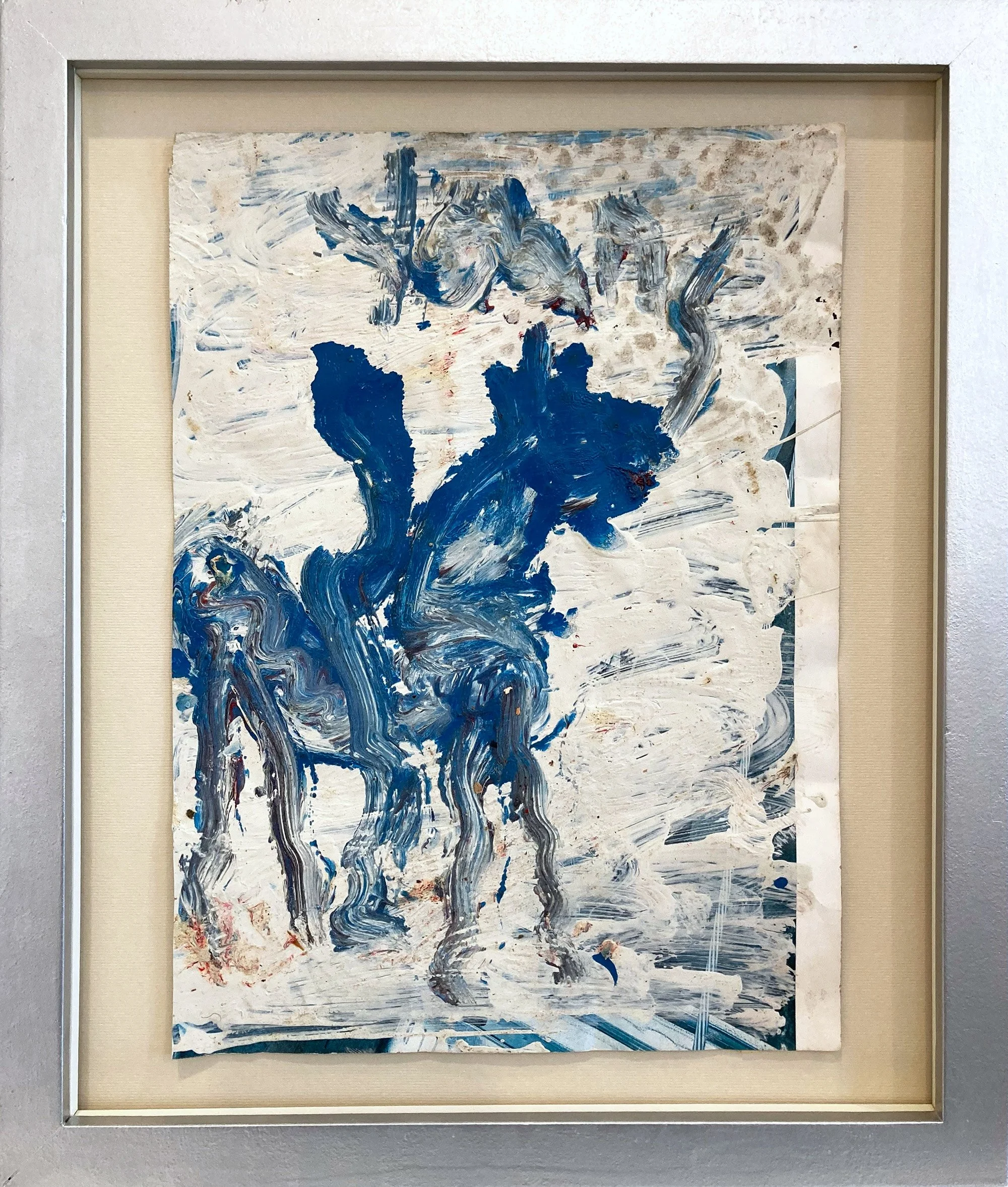
Young’s art is defined by a distinct set of spiritual and social symbols. He frequently painted wild horses to represent freedom, angels with halos to signify goodness, and "Big Brother" eyes to critique government surveillance. His figures often appear elongated and fluid, a technique he adapted from El Greco, used to convey the movement and energy of life in the inner city.

By the end of his life, Young had transitioned from a local outsider artist to an internationally recognized figure in Social Expressionism. His prolific output, created from the scraps of the streets he documented, is now featured in prestigious institutions like the Smithsonian American Art Museum and the Metropolitan Museum of Art. He remains a central figure in American vernacular art, celebrated for turning urban decay into profound spiritual commentary. Purvis Young died on April 20, 2010, in Miami, Florida.
Purvis Young

Purvis Young was born in Liberty City, a neighborhood of Miami, Florida, on February 2, 1943. He was first introduced to drawing by his uncle, a local sign painter, and Young developed as a self-taught artist, whose work served as a visual pulse for Miami’s Overtown neighborhood. Young’s creative turning point occurred during a three-year prison sentence in his late teens. Deprived of formal art training, he spent his time in the prison library studying the masterpieces of Rembrandt and Van Gogh, developing a style that would later merge classical influences with raw, urban expressionism.

Upon his release in the mid-1960s, Young settled in Overtown, a community then struggling with the impacts of urban renewal. In the early 1970s, he gained fame for transforming a derelict passageway known as Goodbread Alley into an outdoor gallery. He nailed hundreds of his paintings to the walls of abandoned buildings, using discarded materials like plywood and cardboard as his canvases to bring his community's stories to light.

Young’s art is defined by a distinct set of spiritual and social symbols. He frequently painted wild horses to represent freedom, angels with halos to signify goodness, and "Big Brother" eyes to critique government surveillance. His figures often appear elongated and fluid, a technique he adapted from El Greco, used to convey the movement and energy of life in the inner city.

By the end of his life, Young had transitioned from a local outsider artist to an internationally recognized figure in Social Expressionism. His prolific output, created from the scraps of the streets he documented, is now featured in prestigious institutions like the Smithsonian American Art Museum and the Metropolitan Museum of Art. He remains a central figure in American vernacular art, celebrated for turning urban decay into profound spiritual commentary. Purvis Young died on April 20, 2010, in Miami, Florida.

  VIEW AVAILABLE WORKS

VIEW AVAILABLE WORKS

1stdibs_lilacgallerynyc.jpg

Terms and Conditions | Privacy Policy | Sales Policy

GALLERY HOURS BY APPOINTMENT ONLY: Monday to Friday & Weekends upon request

All rights reserved - © 2012-2026 Lilac Gallery Ltd. | 833 Broadway | 3rd Floor | New York, NY 10003 | Tel +1 (212) 255-2925